Home
This comprehensive and informative resource is created and maintained by fans and is not associated with the original creators of Swell. Anyone may contribute, whether it be information about items, locations, lore, or strategies for approaching the game (Valheim Wiki).
About
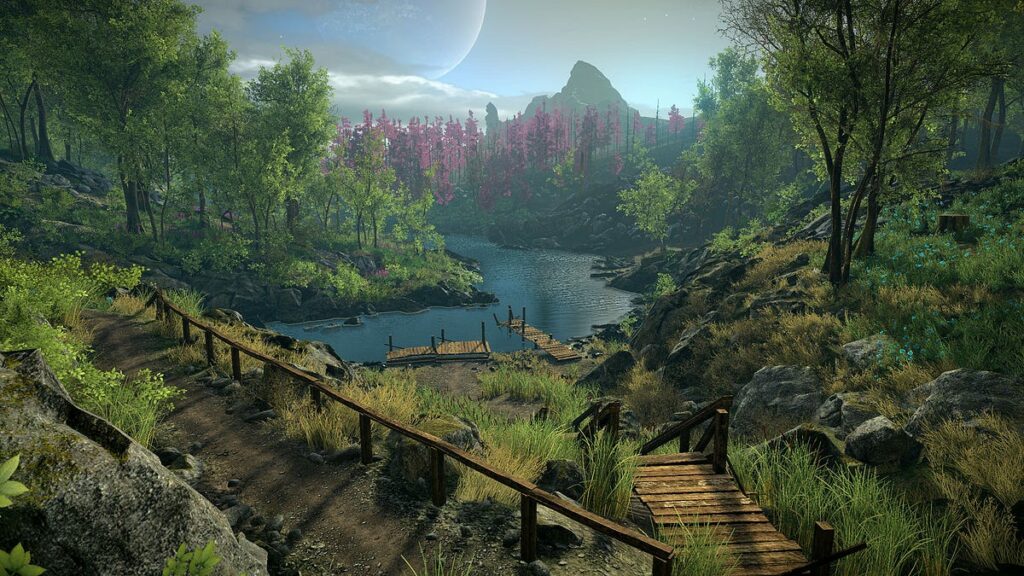
Swell is a single-player 2025 PC video game that blends the traditional aspects of survival gameplay, such as skill-building, resource collection, and combat, with the style of decision-based story games. Swell is based on three poetry collections: Natalie Diaz’s When My Brother Was an Aztec (2012), Afaa Michael Weaver’s The Government of Nature (2013), and Donika Kelly’s Bestiary (2016). Each poetry collection assumes the role of a spiritual force in the world of Swell known as “Shades.”The main gameplay elements include exploration, interacting with mobile objects (mobs), artifact collection, and decision-making.
From Swell’s creator, Mina Stevens, during an interview with herself in October 2025 after working her way through the unofficial Wiki’s content:
“This Wiki is a meta-essay: an essay in the form of a Wiki about poetry collections in the form of a fictional video game that I have dubbed ‘Swell,’ referring to the unsettled nature of the poetry collections that I am working with. This Wiki is a great opportunity for players and fans to provide their analyses of the game’s environments, artifacts, and storylines. Through this Wiki, I believe, we can discover the deeper connections that these poets share.”
Gameplay Summary
In the mystical world of Swell, the player controls an unnamed character who must navigate a forever-changing landscape that can only be traversed by understanding the ways of the three spiritual entities, or “Shades.” The Shades are emotionally volatile entities, each with their own distinct narratives and behaviors. Their emotions, constantly fluctuating between hostility and tranquility, manipulate the effects and powers of the artifacts, mobs, and environments in the game world. The player’s relationship with each Shade is signified by an “Understanding Scale” that increases and decreases depending on actions and decisions that the player makes.
The game follows a nonlinear storytelling style with multiple endings. Actions will always have consequences, but many outcomes are difficult to control or unpredictable. The player may die an infinite number of times and consequences to dying include losing artifacts, losing progress on a current scenario, and/or lowering an Understanding Scale. The player will always reincarnate in the last place they rested.
Basic Lore
The three Shades that occupy the world of Swell are “Ni-Cuerpo” (inspired by Natalie Diaz’s When My Brother Was an Aztec), “Cypress” (inspired by Afaa Michael Weaver’s The Government of Nature), and “Myth” (inspired by Donika Kelly’s Bestiary).
Ni-Cuerpo (Spanish for “neither-body” from the Spanish proverb quoted on page IX in Diaz) is a feminine Shade whose domain contains hostile landscapes and locations like Harvester’s Field and The Carnival. While in contact with Ni-Cuerpo, the player is hunted by dogs while collecting artifacts like ribs and knives.
Cypress (named after the sturdy tree that is featured on the front cover of Weaver) is a masculine Shade whose domain features passive but unnavigable landscapes such as Cold Mountain and Roads to Nowhere. While in contact with Cypress, the player is more prone to dying from lack of sustenance and extreme fatigue than dying from aggressive mobs.
Myth (named after the use of mythological creatures in Kelly) is a feminine Shade whose domain is initially the most comforting of the three, complete with quiet places like Still-there Island and The Room. Artifacts associated with Myth are often artifacts of protection, such as locks and wings. Although Myth’s domain is seemingly serene compared to those of Ni-Cuerpo and Cypress, there is an underlying evil that is slowly revealed to the player throughout the course of Swell.
The Game’s Creation
From the game’s creator, Mina Stevens, during an interview with herself in October 2025:
“I am highly interested in the ways that video games can be used to analyze our personal relationships with agency, material, and spatiality through decision-making, items, and maps. Confessional poetry is also a space to explore these attributes of the human experience, as poets share choices, symbols, and settings that have influenced their life. At their core, both the form of the video game and the form of confessional poetry explore the ways in which humans must survive.”